
Wordfully Black Friday 2026: 50% Off Pro
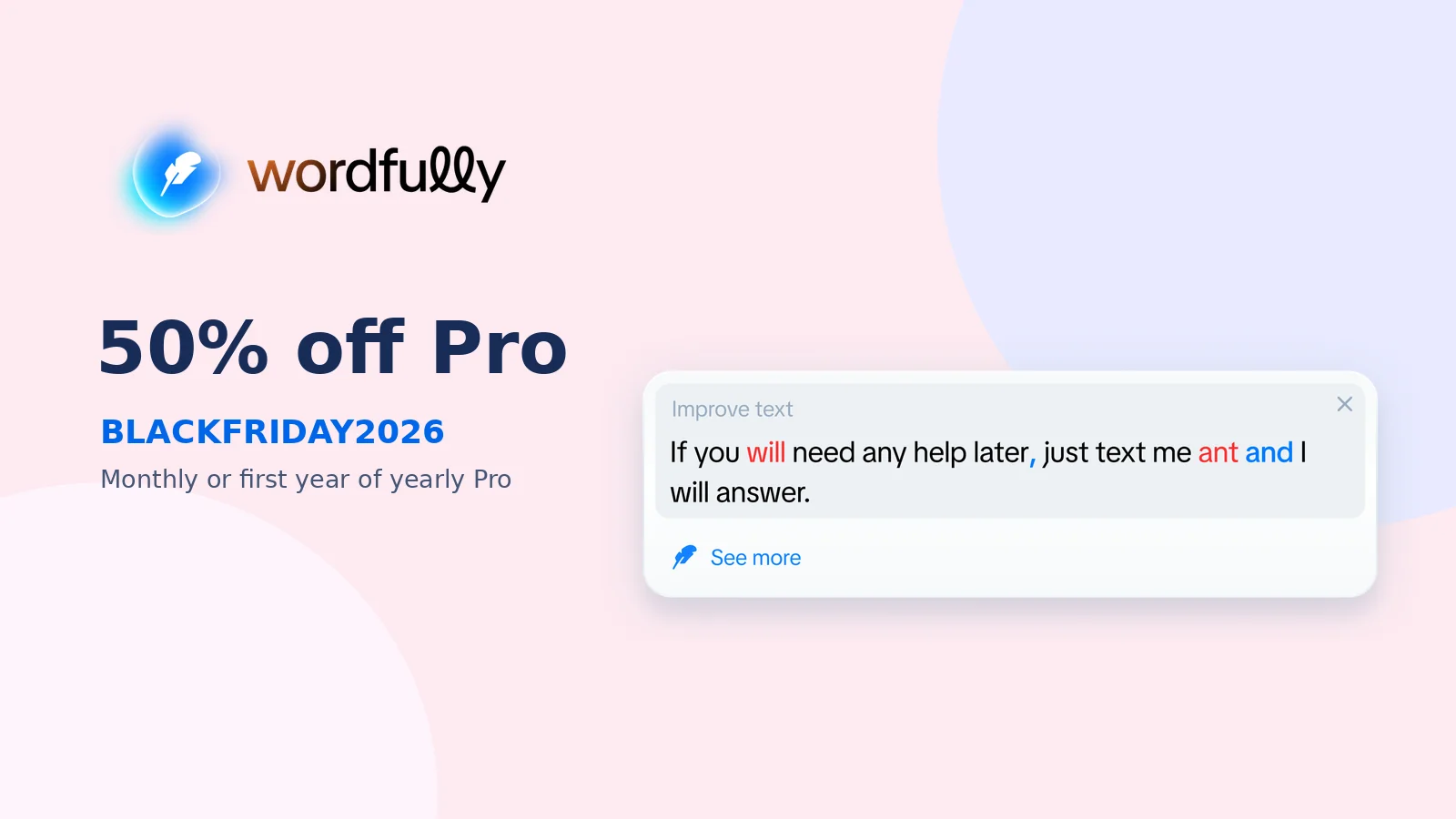
Wordfully's Black Friday 2026 offer gives 50% off Pro (monthly, or the first year on the yearly plan) with code BLACKFRIDAY2026. Open the Wordfully Black Friday offer page to choose a plan. For new paying customers only. Taxes may apply. Cancel anytime. Cannot be combined with other offers. Check the amount and billing details shown at checkout before you pay.
Pro also comes with a 7-day full refund. If it does not suit your writing routine, cancel within seven days of paying and get all your money back. If you cancel later, Pro remains available until the end of the period you paid for.
Where the name Black Friday comes from
The phrase is older than the sale. In 1869, the financiers Jay Gould and James Fisk tried to buy up the gold market in New York, and the crash that followed went down as the Black Friday scandal. The Library of Congress tells the story of Gould and Fisk. That Friday had nothing to do with shopping.
The shopping meaning started in Philadelphia. The day after Thanksgiving filled downtown with holiday shoppers, and the Army-Navy football game brought crowds into the city the next day, as El País explains. Police officers worked long shifts through the traffic and called the day Black Friday. The earliest printed record of the police usage is a January 1966 note in The American Philatelist, cited in the German Wikipedia article on Black Friday. An even earlier use turned up in a 1951 factory newsletter, which applied the phrase to workers calling in sick the day after Thanksgiving, according to G1's ten facts about the date.
Shop owners disliked the name. By 1961, Philadelphia merchants were trying to rename the day "Big Friday", and the new name never caught on, RBC writes. The familiar story about store ledgers moving from red ink to black ink came later, and RBC calls it an attractive but unreliable legend. A 2013 internet rumor that linked the day to slavery has no basis either, as the French Wikipedia article notes.
The date itself comes from a law. Thanksgiving used to fall on the last Thursday of November, and in 1939 that was November 30, the last day of the month. After two years of disagreement, President Roosevelt signed a resolution on December 26, 1941, that fixed the holiday on the fourth Thursday, the U.S. National Archives records. That rule is why Black Friday 2026 falls on November 27.
It still took decades for the day to top the shopping calendar. G1 reports that the term spread beyond Philadelphia only in the mid-1990s, and that Black Friday became the biggest shopping day of the year in the United States in 2001.
Other countries borrowed it much later:
| Country | When Black Friday arrived |
|---|---|
| Germany | Apple ran the first Black Friday discounts in 2006, and the event grew large from 2013. In July 2023 the Federal Court of Justice let stand a ruling that cancelled a "Black Friday" trademark (German Wikipedia). |
| Brazil | Online shops ran the first Black Friday deals on November 26, 2010 (G1, 2010). |
| France | The event started online in 2013 (French Wikipedia). |
| United Kingdom | Fights broke out at Asda stores on Black Friday 2013 (The Guardian). |
What Pro adds to your writing routine
The Wordfully pricing page lists four useful Pro benefits: unlimited corrections, tone and style suggestions, rewriting full sentences, and no text length limits. The difference matters most when writing is part of your day, rather than a single short message.
| Pro benefit | When it helps |
|---|---|
| Unlimited corrections | You have several drafts to check in a day. |
| Tone and style suggestions | A message sounds too abrupt or too formal for its reader. |
| Full-sentence rewrites | Changing one word will not make a tangled sentence clear. |
| No text length limits | You want to work on a longer draft without splitting it up. |
For example, a short reply may need only a spelling correction. A project update may need a different tone, while a long explanation may be clearer after a sentence rewrite. These are separate decisions: accept a correction because it is right, and accept a rewrite because it says what you meant. Our guide to checking an AI rewrite shows what to review before using a suggestion.
What the editing interface shows
Wordfully's writing interface presents a suggested change beside the text you are working on. The grammar tooltip shows the original wording in red and the proposed fix in blue. The rephrase card shows removed words with a strikethrough and additions in blue, so you can compare the two versions before choosing one. Tone controls include options such as Shorter, Friendly, and Assertive. The product images below show the actual interface.
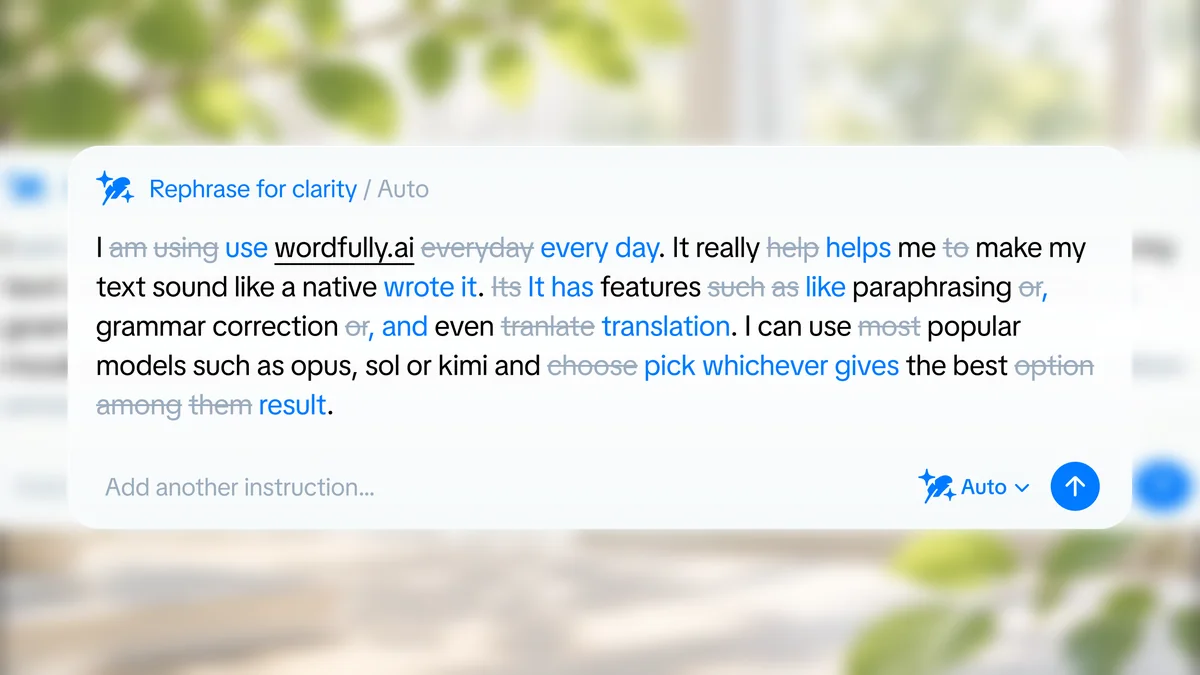
That comparison is useful because a smoother sentence can still miss your point. Read the suggestion in its surrounding paragraph. Check names, dates, and any promise you make to the reader. Then decide whether the new wording sounds like you. If tone is the sticking point, our article on making AI text sound natural has more examples.
Try Pro on writing you already do
Start with a message you need to send, not a sample written just to test a tool. A real draft gives you a better way to judge whether Pro earns its place in your routine. Here are three useful checks during the refund period:
- Check a routine draft. Review an email or update for corrections. Accept only the suggestions that improve accuracy or clarity.
- Compare a sentence rewrite. Pick a sentence that feels awkward, then compare the suggestion with your original for meaning and emphasis.
- Review tone in context. Read a suggested tone change as the recipient would. A friendlier sentence may help one message; a direct sentence may suit another.
The Purdue Online Writing Lab's conciseness guide is a useful reminder to cut words that do no work. The Federal Plain Language Guidelines likewise favor familiar words and direct phrasing. Neither principle means accepting every shorter suggestion. Keep the details your reader needs.
Here is a small edit you can judge for yourself:
Before: Please let me know if you want to claim the offer today.
After: Please let me know whether you want to claim the offer today.
"Whether" makes the request for a choice clearer without adding a new fact. In a longer draft, use the same test: does the revision preserve the information and change only the wording? If you write across browser apps, see how Wordfully works in your browser.
How to claim the Black Friday offer
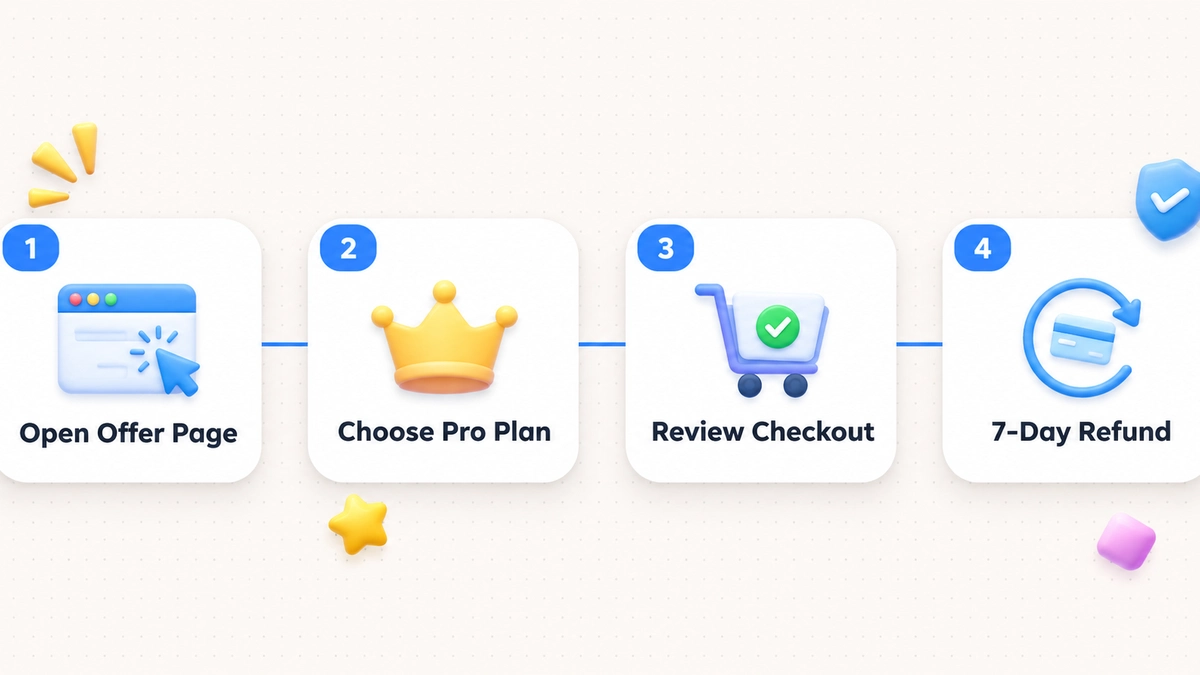
- Open the Wordfully Black Friday offer page.
- Choose Pro monthly or yearly. The 50% offer applies to monthly Pro or the first year of yearly Pro.
- Review the checkout details, including any taxes and the billing period, before paying.
- Use Pro on your normal writing during the seven-day refund period. If it is not right for you, cancel within seven days of paying for a full refund.
Black Friday offer questions
Can an existing Pro customer use the code?
The offer is for new paying customers only. It cannot be combined with another offer.
Is the discount the same for monthly and yearly plans?
The offer is 50% off Pro monthly, or 50% off the first year on the yearly plan. Review the plan and billing details at checkout so you know what you are choosing.
Can I cancel after the refund period?
Yes. You can cancel anytime. If you cancel after the seven-day full refund period, Pro stays available until the end of the period you paid for.
Ready to use the code? Visit the Wordfully Black Friday offer page and choose the Pro plan that fits your writing routine.